
What Blockbuster Forgot and Amazon Never Did: The Power of Customer Obsession

The ultimate goal of every business is to generate profits. But let’s be honest, profits come from only one source, your customers. They decide if your idea matters, if your product is worth paying for, and if your business will survive.
And yet, countless startups fail not because their idea was bad, but because they forgot to listen to the people they were building for.
The Rise and Fall of Blockbuster
Let’s revisit one of the famous lessons in business history.
In the early 2000s, Blockbuster was the undisputed leader in movie rentals. Their stores were everywhere; renting DVDs was part of everyday life. But there was one big problem - late fees. Customers hated them.
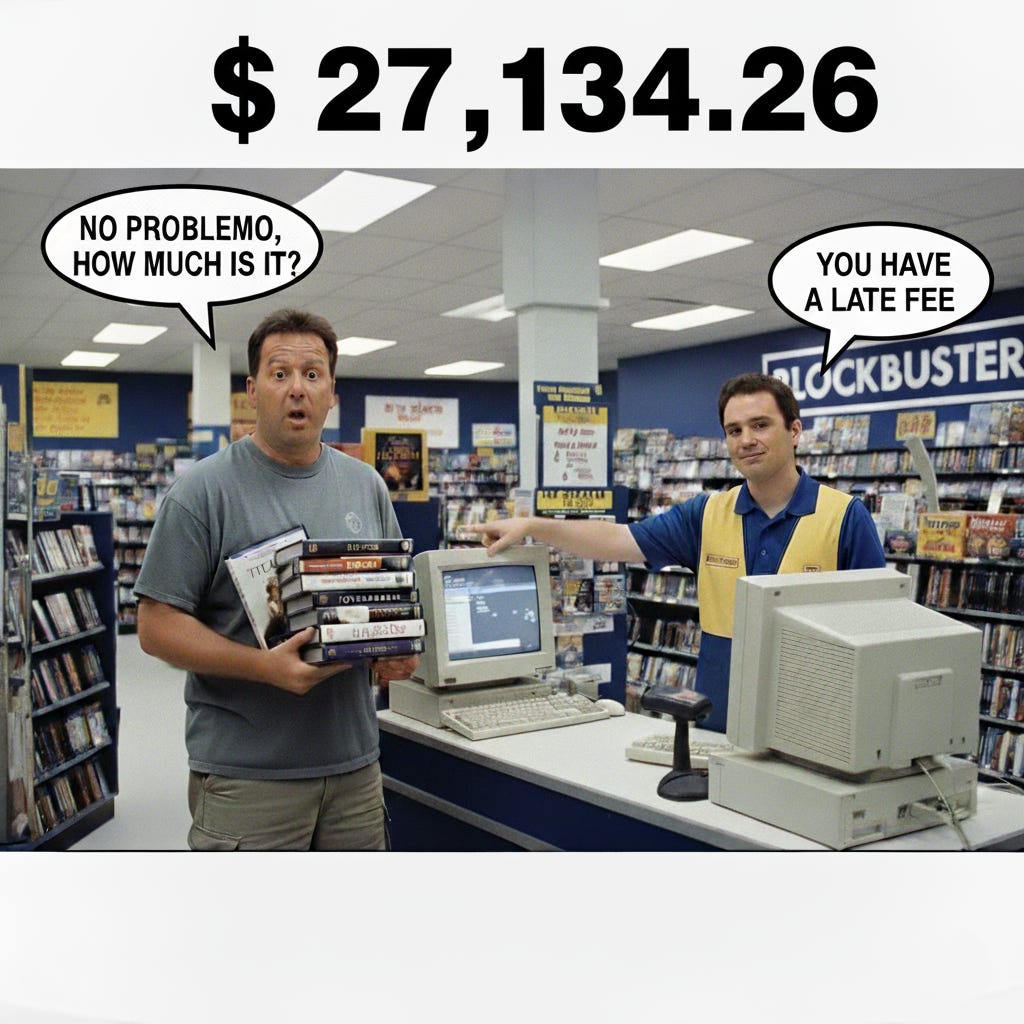
Then came Netflix, a small, quiet newcomer with a simple promise: DVD rentals by mail, no late fees. They listened to what customers disliked about Blockbuster and built their entire business around solving that pain point.
By 2004, Blockbuster tried to copy Netflix with their own DVD-by-mail service, but it was already too late. Netflix had built trust and loyalty, while Blockbuster was still trying to protect its old business model.
When streaming became the next big shift, Netflix moved quickly. Blockbuster moved slowly. The rest is history, Netflix thrived; Blockbuster filed for bankruptcy in 2010.
You can watch the story here:
And here’s the ultimate irony: Netflix’s CEO Reed Hastings once offered to sell Netflix to Blockbuster for $50 million in 2000. Blockbuster laughed it off. Today, Netflix is worth over $200 billion.
So, what went wrong? Blockbuster didn’t take their customers seriously. They punished them with late fees, ignored their frustration, and resisted innovation until it was too late.
MySpace: When Monetization Killed the Experience
Remember MySpace? It was the first big social network, the one that came before Facebook. MySpace had the audience, the buzz, and even the head start. But guess what? They focused too much on advertising and not enough on user experience.
Wanna see how MySpace looked? Here you go:
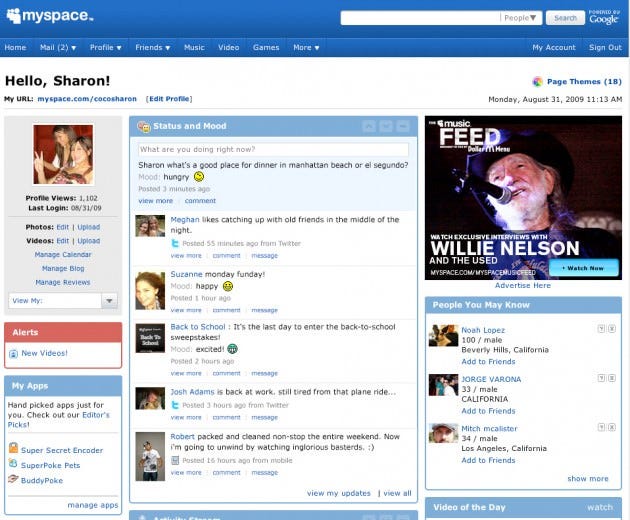
The platform became cluttered, slow, and chaotic. Users felt overwhelmed. Facebook arrived with simplicity, clarity, and care for the user. It wasn’t about perfection, it was about what people actually wanted.
And that’s why Facebook won.
The Client Comes First
When you start a business, you probably believe your idea is perfect. You think people will love it as much as you do. But then reality hits. Your product doesn’t gain traction. You feel frustrated and lost.
Here’s the truth - you don’t decide what the market wants. Your customers do.
According to statistics, nearly 90% of startups fail. And many of them fail because they build something people don’t really need.
Start With Paying Customers, If You Can
The best way to start a startup is to find customers first. If you can identify a group of paying customers before you even build the product, you already have validation. You don’t need fundraising. You don’t need endless pitches. You just need to listen and build for them.
This is rare, but it’s the strongest possible foundation for a business.
If You Don’t Have Paying Customers, Find Pilot Users
If you can’t find paying customers yet, look for pilot users, early adopters who are willing to test, experiment, and give feedback. They can be small businesses, professionals, or individuals.
Even if your product is incomplete, it’s valuable to start conversations. Ask them what works, what doesn’t, what they wish they had.
Because as a founder, you don’t know what customers need, only customers know that.
And If You Have Neither, Don’t Give Up
Sometimes, you might have neither paying customers nor pilot users. It’s hard, but not impossible. If you’re building something truly new, e.g. a product for a market that doesn’t yet exist, you’re taking a harder path. But if your timing is right, you might find yourself in a blue ocean with no competition. That’s how unicorns are born. Still, even then, you must listen.
Perfection Is the Enemy of Progress
Winston Churchill said, “Perfection is the enemy of progress.”
Don’t get stuck chasing perfection. You don’t know what “perfect” looks like anyway. Your customers do.
Act. Learn. Iterate. Improve. Don’t waste years refining something in isolation that no one needs. Every hour you spend talking to customers is worth more than a week of perfecting code or polishing design.
How to Listen to Customers
There are simple ways to do this:
Surveys and interviews: Keep them short and specific. People don’t like long forms, but they will answer if you make it clear and easy.
Social media feedback: Watch what people are saying. Respond. Engage.
Prototyping: Build quick mockups or MVPs and get reactions.
Data: Measure how customers use your product, where they drop off, what features they ignore.
Then, iterate. Quickly.
Solve Real Problems
Your goal isn’t to impress investors or win design awards. Your goal is to solve real problems for real people. That’s how loyalty and revenue grow.

And when things go wrong, and they will, handle your customers with care. A good experience with support can turn a frustrated user into a lifelong fan.
There’s a simple rule:
The customer is always right.
If the customer is not right, read point one again.
Even if the customer is mistaken, make them feel heard and respected. That emotional connection pays off in the long run. Word of mouth is still the most powerful marketing strategy ever created.
Build a Customer-Centric Culture
Make your entire company care about customers. Every employee should think about how their work affects the user.
The best example of this is Amazon. Jeff Bezos famously left an empty chair in meetings to represent the customer. Whenever a decision was discussed, that chair reminded everyone who truly mattered, his customer, his real boss.
Amazon’s success didn’t come from technology alone; it came from customer obsession.
Customer Obsession Instead of Competitor Obsession – Jeff Bezos
Don’t obsess over what your competitors are doing. That’s a distraction. Your true north is your customer. If you take care of them, they will take care of your business.
Wanna check out the video where Jeff Bezos explains why customer obsession matters?
Customers are never fully satisfied. They always want something better, faster, easier, more personalized. What is “good” for you is rarely good enough for them. And that’s a good thing. Their dissatisfaction is what drives innovation. It pushes you to improve, to question, to evolve.
Your customers are the heartbeat of your business. They can make it thrive or make it disappear. Every piece of feedback, every complaint, every request is a signal, a direction pointing toward growth. Ignore it, and they will quietly move on to someone who listens. Embrace it, and they will stay, support you, and help you build something truly great.
At the end of the day, it’s your customers who decide whether your business lives or dies.
Final thought
Perfection will slow you down; customers will guide you forward.
So, stop chasing flawless. Start chasing useful.
Stop asking, “Is it perfect?” and start asking, “Does it help someone today?”
Because in the end, success doesn’t come from perfect products. It comes from perfect focus on your customers.
If you enjoyed this post, share your thoughts in the comments and subscribe to get more real stories and lessons from the startup world.
Phenomenal article and analysis. As I read this, I felt so many of these points hit home within my industry and apply to just about every type of business.